
Induction Billet Heaters for Metal Forming — Fast, Safe, Reliable
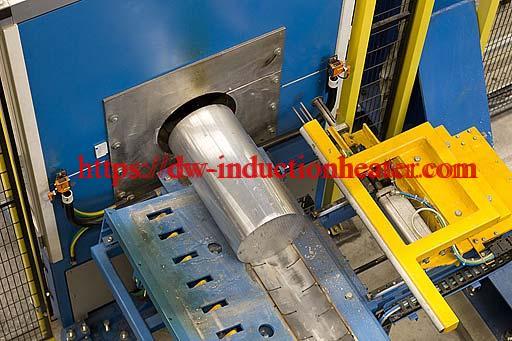
In the dynamic world of metalworking and industrial forging, efficiency, precision, and safety are non-negotiable. As manufacturers strive to meet the growing demands for high-quality forged components, the tools and techniques they employ become critical. Among the most transformative technologies revolutionizing the metal forming industry are induction billet heaters for metal forming.
These systems, which use electromagnetic induction to heat metal billets before they are forged, rolled, or extruded, have become the go-to solution for businesses looking to streamline production, minimize waste, and enhance operator safety. This article explores the working principles, advantages, and applications of induction billet heaters, showcasing why they are the preferred choice for modern metal forming operations.
What Are Induction Billet Heaters?
Induction billet heaters are specialized machines used to heat metal billets — cylindrical bars or rods of metal — to a specific temperature before forming processes such as forging, hot rolling, or extrusion. Unlike traditional furnaces that rely on convection or conduction, induction heaters use electromagnetic fields to generate heat directly within the metal.
By rapidly heating the billets from the inside out, these systems reduce heat-up times and energy consumption while providing highly uniform temperature control. The result is a faster, safer, and more controlled heating process suitable for metals like steel, copper, aluminum, brass, and titanium.
How Induction Heating Works
Induction heating is based on the principle of electromagnetic induction. When an alternating current flows through a copper coil (the induction coil), it creates a rapidly changing magnetic field. When a metal billet is placed within this field, electric currents (known as eddy currents) are induced within the billet. The resistance of the metal to these eddy currents causes the material to heat up.
This method offers several key advantages:
-
Non-contact heating: The billet does not need to touch the coil, reducing wear and contamination.
-
Selective heating: Only the billet is heated, not the surrounding environment, resulting in energy savings.
-
Precise temperature control: Temperature can be controlled in real-time, improving quality and consistency.
Key Benefits of Induction Billet Heaters
1. Speed and Efficiency
One of the most compelling advantages of using induction billet heaters for metal forming is their speed. Induction heating brings billets to the desired temperature in a fraction of the time it takes traditional furnaces. This quick heat-up time translates into shorter cycle times and higher throughput.
2. Superior Temperature Uniformity
Induction heaters deliver consistent and uniform temperature throughout the billet, which is essential for processes like forging. Uneven heating can lead to defective parts and increased scrap rates. With induction technology, manufacturers gain precise control over heating profiles, minimizing variations.
3. Energy Savings
Induction systems are highly energy-efficient, converting more than 90% of the power input into usable heat within the billet. In contrast, traditional gas or resistance furnaces waste significant energy through heat loss to the environment. This reduction in energy usage not only lowers operating costs but also supports sustainability goals.
4. Improved Workplace Safety
Safety is a top concern in any industrial environment. Traditional furnaces expose workers to open flames, hot surfaces, and harmful emissions. Induction billet heaters, on the other hand, are enclosed and generate no flames, significantly reducing the risk of burns, fire, or inhalation of toxic fumes. They also operate with minimal noise, contributing to a more comfortable workplace.
5. Compact and Modular Design
Modern induction heaters are designed to occupy less space while offering high power output. Their modular design allows for easy installation, expansion, and maintenance. Businesses can start with a single unit and scale up as demand grows.
Applications in Metal Forming Industries
Induction billet heaters are widely used in industries that require precision heating of billets before shaping processes. Common applications include:
-
Hot forging: Heating billets before being shaped into components like gears, axles, and crankshafts.
-
Extrusion: Preparing billets for extrusion into pipes, rods, and structural components.
-
Rolling mills: Preheating metal rods before they pass through rollers to form sheets or other profiles.
-
Upsetting and heading: Preparing ends of metal rods for shaping into fasteners or other parts.
Whether dealing with steel, copper, aluminum, or exotic alloys, induction billet heaters for metal forming provide the precise heat required for high-quality results.
Customization for Different Metals
Different metals have different thermal conductivity and magnetic properties. For instance, aluminum requires higher frequency induction and careful temperature control due to its high thermal conductivity. Steel, with its magnetic properties, heats efficiently under induction.
Leading induction heating solutions are customizable to accommodate:
-
Metal type and size
-
Desired output temperature
-
Cycle time requirements
-
Production line layout
Manufacturers can choose from single billet heaters or systems that support multiple billets simultaneously, depending on throughput needs.
Digital Control and Automation
Modern induction billet heaters are equipped with digital control systems that allow real-time monitoring of temperature, energy consumption, and process parameters. Features include:
-
Programmable heating profiles
-
Automatic billet loading and unloading
-
Temperature sensors and infrared pyrometers
-
Fault detection and self-diagnostics
These features not only enhance process consistency but also reduce human error and operational downtime.
Environmental Advantages
As environmental regulations become more stringent, industries are under pressure to reduce emissions and energy consumption. Induction billet heating aligns perfectly with green manufacturing goals:
-
No combustion gases: Unlike gas-fired furnaces, induction heating emits no carbon dioxide or NOx gases.
-
Reduced energy waste: With minimal heat loss to the environment, induction is one of the cleanest heating technologies.
-
Lower carbon footprint: By reducing energy usage and emissions, companies can meet sustainability benchmarks more easily.
Why Choose DW-Induction Heating?
For companies seeking reliable, high-performance induction heating solutions, DW-Induction Heating offers cutting-edge systems tailored for industrial use. Their induction billet heaters for metal forming are engineered for durability, efficiency, and precision.
With decades of experience in designing and delivering induction systems, DW-Induction Heating supports clients in:
-
Selecting the right heater for their application
-
Customizing configurations for specific metals and throughput
-
Integrating induction heaters into existing production lines
-
Providing maintenance, training, and technical support
The company’s commitment to innovation and quality has made them a trusted partner across industries such as automotive, aerospace, construction, and metal fabrication.
Conclusion
In an era where speed, safety, and sustainability are paramount, induction billet heaters for metal forming stand out as a revolutionary technology for modern manufacturing. Their ability to deliver rapid, precise, and eco-friendly heating is transforming the metal forming landscape.
From enhancing product quality to minimizing environmental impact, induction heating is more than just a technological upgrade — it’s a strategic investment in the future of metalworking. Whether you’re looking to increase output, improve worker safety, or cut energy costs, it’s time to consider induction billet heaters as the cornerstone of your heating process.


